Trail Difficulty

Green — Beginner

Stock-friendly, minimal obstacles. Great for first-timers and newer Jeeps. Most members can run these regardless of build.

Blue — Intermediate

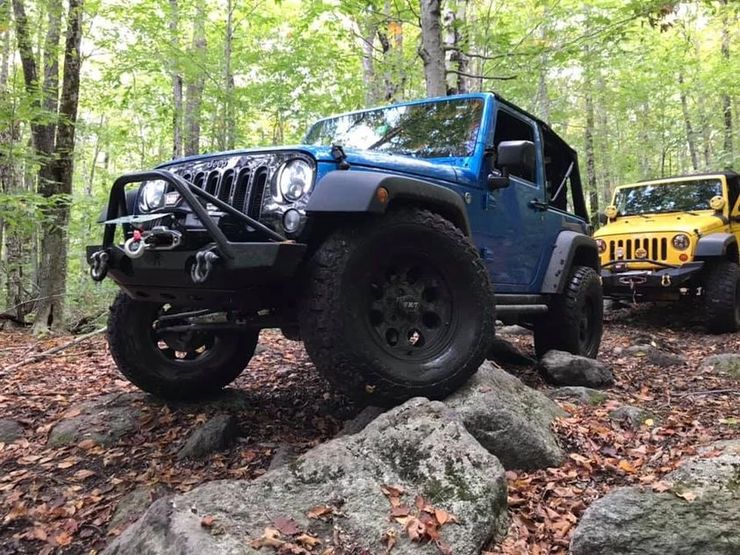
Light modifications helpful. Lift, all-terrain tires, and basic recovery gear recommended. Some experience preferred.

Black — Advanced

Built rigs and experienced drivers. Lockers, skids, and recovery gear required. Know your rig's limits.

How a Typical Run Works

  1. Meet at the designated air-down location
  2. Driver's meeting and safety briefing — everyone attends, no exceptions
  3. Air down to ~16 psi for better traction on the trail
  4. Trail run — groups split by skill level if the terrain warrants it
  5. Lunch stop (if applicable) — bring your own or we'll call it out in advance
  6. Air-up at end using portable compressors — we have club compressors available

What to Bring

  • Recovery gear — tow straps and shackles
  • First aid kit
  • Fire extinguisher
  • Water and snacks
  • Sunscreen and layers — weather changes on trail
  • VHF radio — we can loan one if you don't have one
  • Full-size spare tire and jack
  • Basic tools

Required Safety Equipment

  • Fixed tow points front and rear — bumpers and roll bars do NOT qualify
  • Battery securely mounted — no bungee cords or zip ties
  • 20–30 ft tow strap, 20,000 lb rated, sewn loop ends
  • Seatbelts worn by all occupants
  • Vehicles in 4-low on the trail

Trail Etiquette

  • Stay on designated trails — Tread Lightly principles apply
  • Travel in groups — minimum 2 vehicles
  • Use spotters and hand signals on obstacles
  • Scout terrain before attempting anything uncertain
  • It's always okay to say no to a section
  • Pull over to let others pass
  • Pack out all trash
  • Yield to horses — pull over, turn off engine, ask how to proceed
  • Never drink and drive

Communication

  • VHF radios only — not CB radios
  • Club radios available to loan for new members
  • Stay within line of sight when possible
  • Alert the group to hazards or delays via radio

Recovery Safety

  • Always wear gloves when handling winch cables
  • Never stand in line with a tensioned cable
  • Keep 5 full wraps minimum on winch drum
  • Use tree savers — protect trees and anchors
  • Keep winch hook facing up
  • High-lift jack: use proper lifting points, respect the "Triangle of Death"

Manual Transmission Tips

  • Avoid using the clutch on hills and obstacles
  • Do NOT depress the clutch in water
  • Use 4-low and second gear for better control on technical terrain
New to off-roading? Tell us at the driver's meeting. We'll make sure you're paired with experienced members, know what's coming on the trail, and have a seat available if any section is more than you want to attempt. Nobody gets left behind and nobody gets pressured.
Join to Access Trail Runs